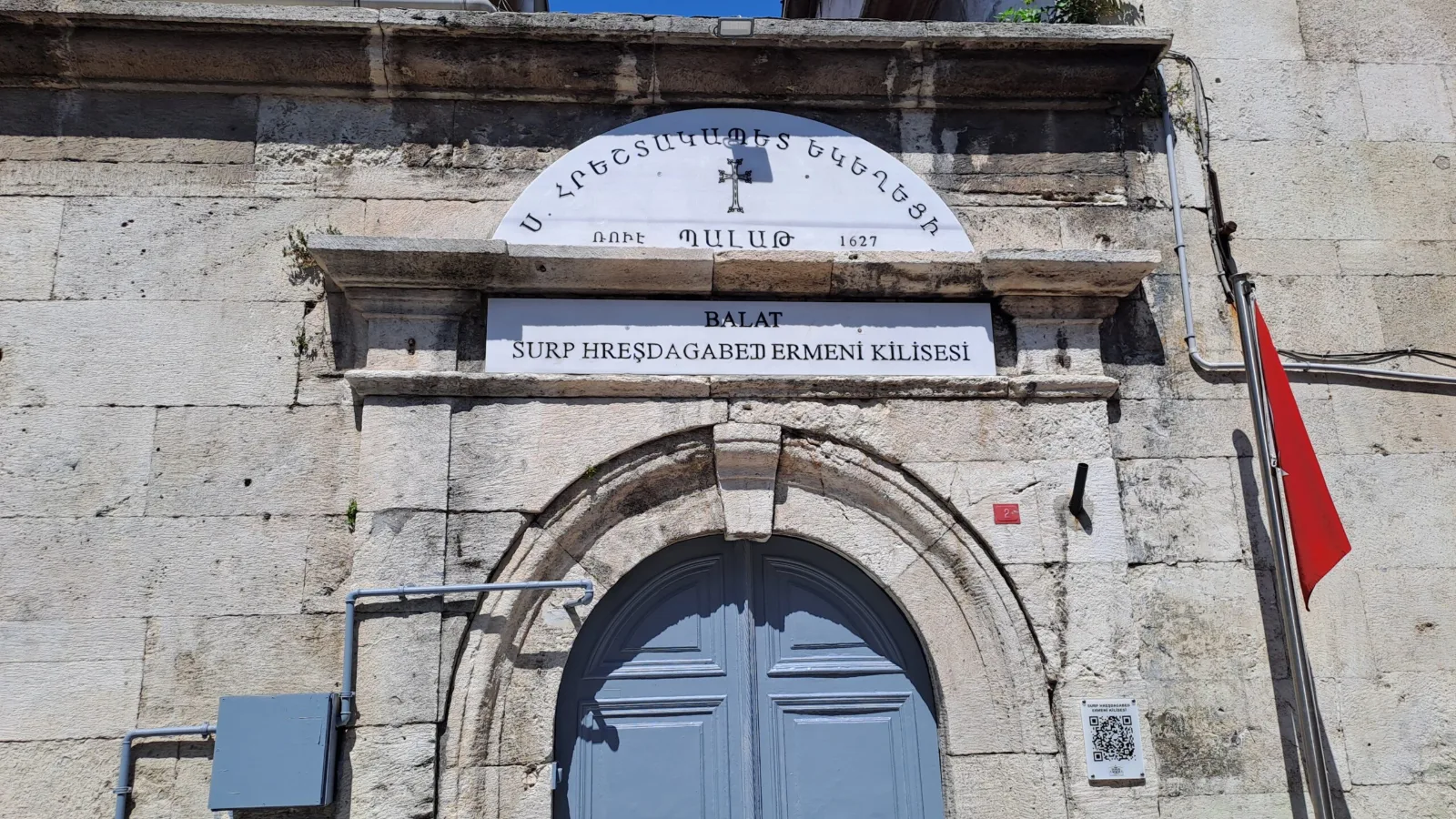
In the Armenian Apostolic Church’s 2026 calendar, Haçverats will be celebrated on Sunday, September 13. The eve of the feast falls on Saturday, September 12. Sources relate that the historical tradition of visiting the church also took place on the Saturday preceding Haçverats.
Balat Day: A tradition where prayer and visitation meet
The visits to Surp Hreshdagabed during the Haçverats period were in the past also known among the people as “Balat Day.” This day became not merely a church service; it turned into a broader tradition in which candles were lit, prayers were offered, votive offerings were presented, and people turned to the church with hopes for healing.
Accounts related to Balat’s multicultural past state that on this special day not only Armenians, but also Greek, Syriac, Jewish, and Muslim visitors came to the church. Thus, Surp Hreshdagabed became one of the rare places in Istanbul where people of different faiths shared their prayers and hopes under the same roof.
Prayers for healing before the Charkhapan Surp Asdvadzamayr
At the heart of the church’s spiritual tradition stands the Charkhapan Surp Asdvadzamayr altar. The term “Charkhapan” is associated with the understanding of the Holy Mother of God who wards off evil and calamity and protects.
According to information provided by the church, the sacred image of the altar dates back to the 1500s. After being rescued from the fire that destroyed the Surp Hovhan Vosgeperan Church in Karagümrük in 1900, the image was brought to Balat’s Surp Hreshdagabed by decision of Patriarch Maghakia Ormanyan.
During the Haçverats period, visitors light candles, pray, and present their wishes before this altar. The church’s own history notes a strong belief and tradition of miracles regarding healings occurring as a result of prayers for healing. These accounts are among the most important reasons the church is known among the people as a healing pilgrimage site.
The Lusaghpur Madur beneath the church
Another sacred space that sets Surp Hreshdagabed apart is the Lusaghpur Madur, that is, the ayazma, located in the lower section of the church.
Opposite the stairs descending to the ayazma stands the Khıntragadar Surp Asdvadzadzin altar, which, in a meaning close to Turkish, is “the Holy Mother of God Who Accepts Requests.” Visitors pray here, seeking the intercession of the Holy Mother of God.
During the 2006 restoration of the ayazma, holy relics attributed to Surp Ardemios and Surp Peprone were unearthed. According to the church’s account, both saints were martyred for not renouncing the Christian faith and were later commemorated among the saints. The relics are preserved today in the ayazma section.
An altar whose curtain does not close even during Great Lent
One of the striking traditions showing the importance of the Charkhapan altar at Surp Hreshdagabed takes place during Medz Bahk — Great Lent.
While the curtains of the other altars in the church are closed during Great Lent, it is noted that the curtain of the Charkhapan Surp Asdvadzamayr altar is left open and the faithful continue to pray there.
This tradition shows that Balat’s Surp Hreshdagabed is not merely a historical church; it is a living spiritual space where the culture of prayer, hope for healing, votive offerings, and visitation is passed down from generation to generation.