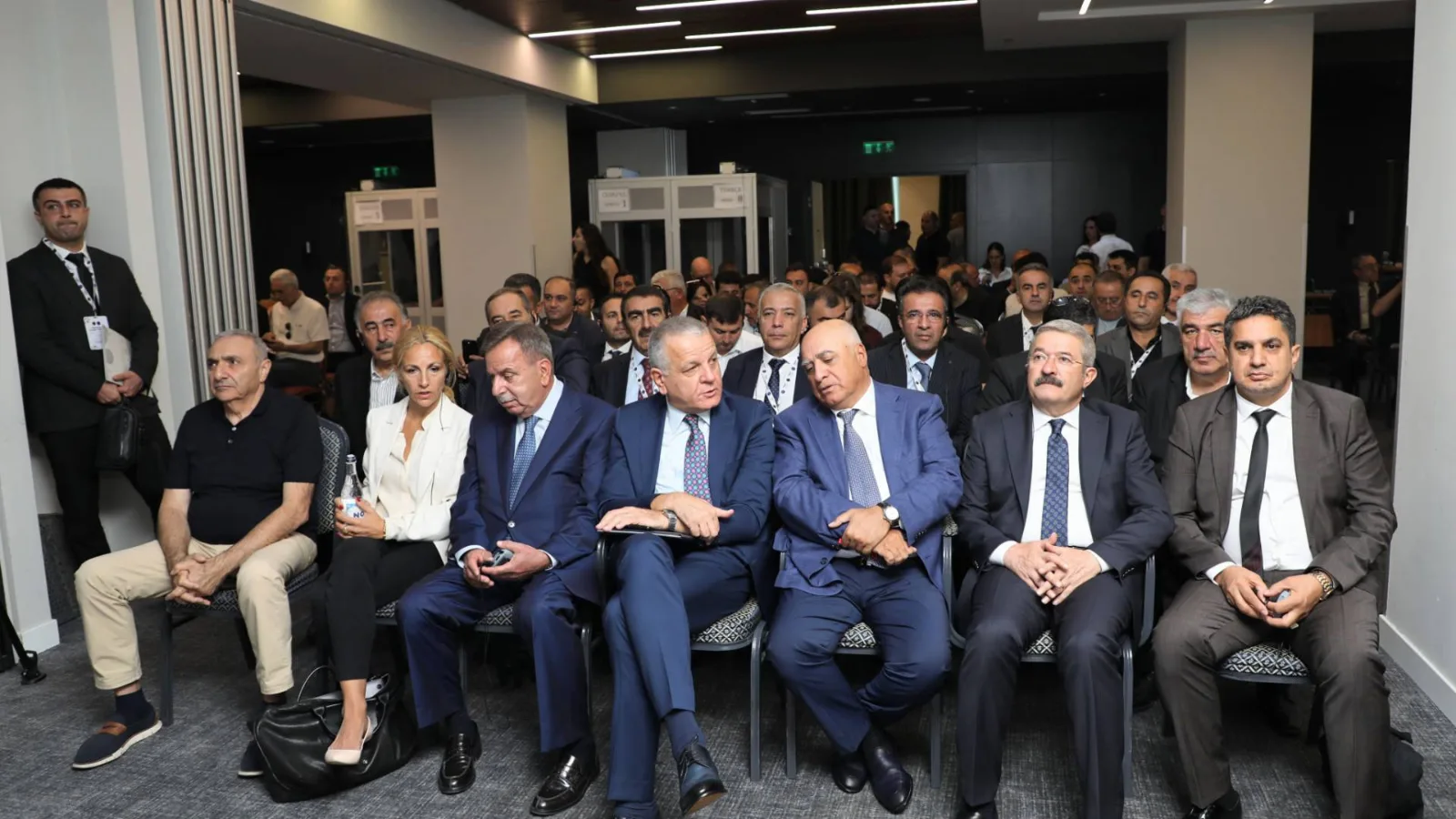
Van Chamber of Commerce and Industry (Van TSO) Chairman of the Board Necdet Takva attended the two-day Armenia–Turkey Business Forum that began in Yerevan. At the gathering organized by the Union of Industrialists and Entrepreneurs of Armenia, implemented with European Union funding under the project “Support to the Armenia–Turkey Normalization Process: Strengthening Cross-Border Ties,” Takva proposed establishing a representation office in Van to manage economic relations on the ground more effectively as normalization advances.
Emphasizing that such a structure would be strategically important for handling commercial matters and coordination locally, Takva said that as Van TSO they are ready to allocate space in the chamber’s building and take the initiative for such a representation office. He underlined that the interests of the city and the region’s business community should be supported by an institutional mechanism.
Drawing attention to contacts in the normalization process and to developments regarding the technical infrastructure of air cargo and border gates, Takva stated that trade is what will cement the path opened by diplomacy. Citing its geographic location, he said Van could serve as an advantageous hub for Turkey’s outreach to Armenia and, via Armenia, to regional markets. If the borders are opened to trade, the road distance between Van and Yerevan could drop to approximately 290 kilometers and be covered in a 3–4 hour journey, thus reducing circuitous transportation via Georgia or Iran and additional re-export costs, he argued.
Takva believes the production structures on both sides have complementary features. He noted that building materials, construction chemicals, plastics and packaging, furniture, and processed industrial products in the Van Organized Industrial Zone could meet part of the demand in Armenia, while Armenia’s strengths in metallurgy, textiles, and certain sectors provide a basis for direct cooperation. Calling on businesspeople to consider not only buying and selling but also co-production and partnership models, he pointed to the possibility of accessing a market of around 180 million, thanks to the country’s membership in the Eurasian Economic Union, if the required local value added is achieved through production in Armenia’s free economic zones.
The Van TSO chairman presented two concrete proposals: an institutional mechanism through which diplomatic representation and economic–commercial issues would be coordinated locally, and the establishment of a cooperation structure that would ensure continuity within the framework of cultural and commercial diplomacy. Noting that closed borders limit not only the movement of goods but also people-to-people interaction, Takva referenced past efforts by civil society and the business community to keep channels of communication open, and the contributions of Armenian business circles; recalling the speech by Ambassador Vassilis Maragos, Head of the EU Delegation to Armenia, he also called for greater support to institutions working in this field in Turkey. This report is based on the text published in Agos.