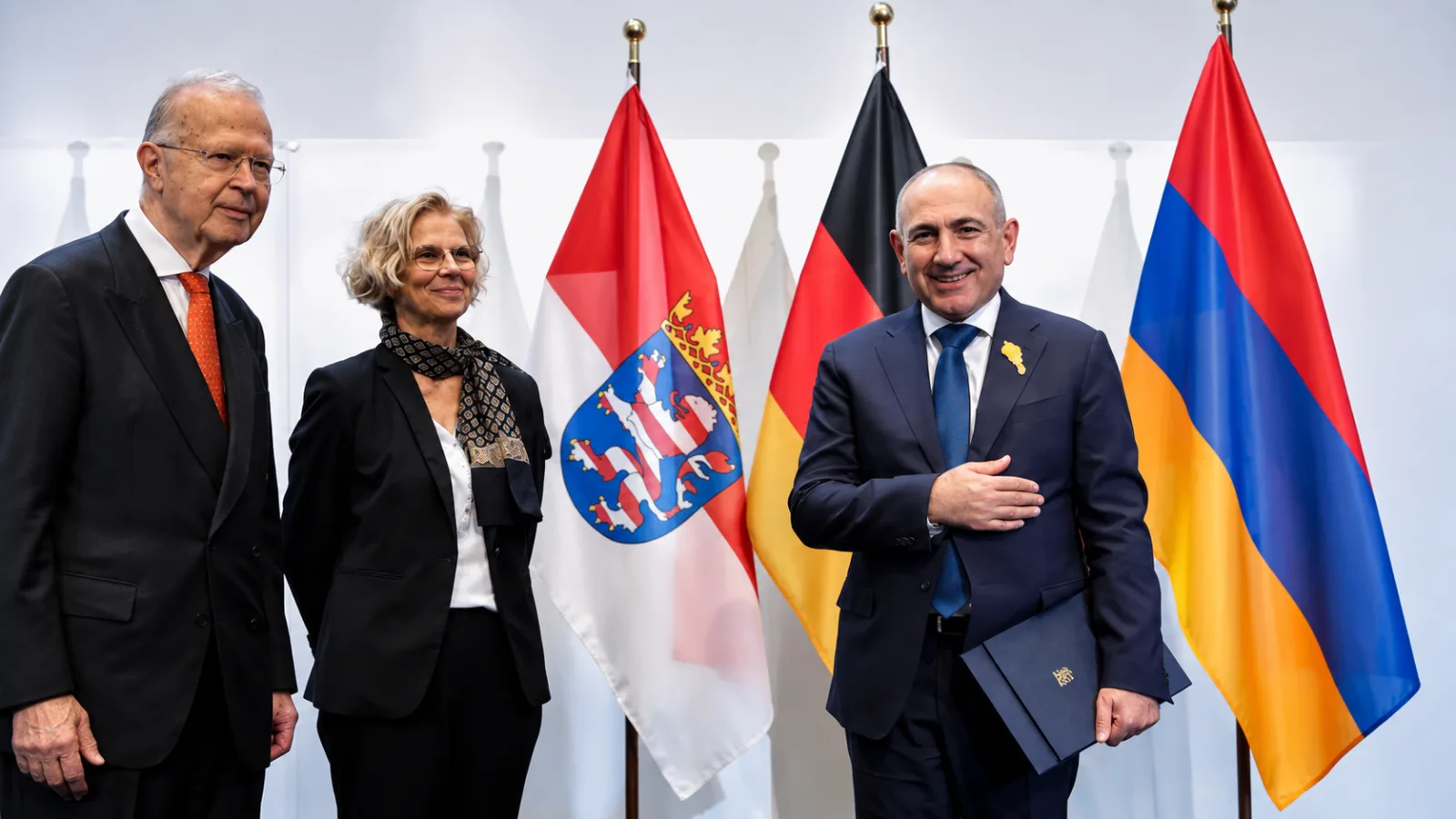
Armenian Prime Minister Nikol Pashinyan has been awarded the Hesse Peace Prize for his efforts toward the peace process in the South Caucasus. Speaking at the ceremony held in Wiesbaden, Pashinyan said that the peoples of Armenia and Azerbaijan cannot change the past, but they can shape the present and the future.
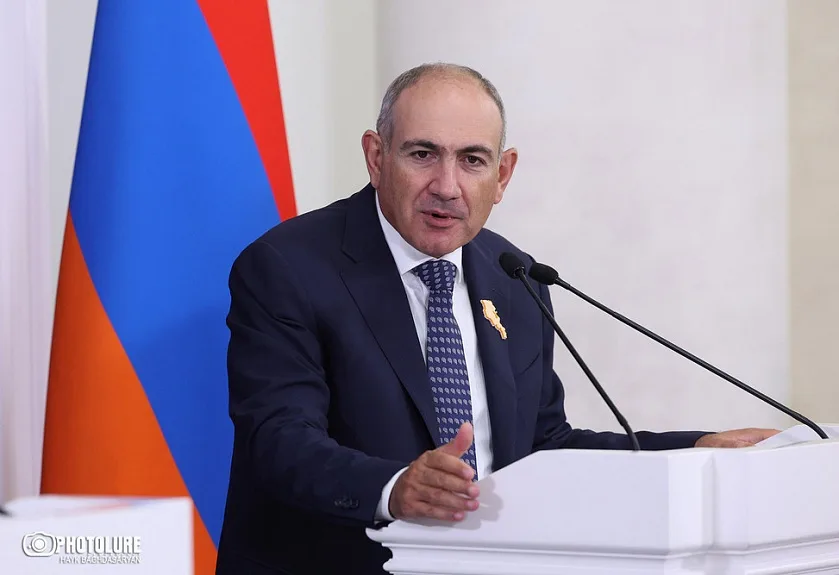
On September 18, Armenian Prime Minister Nikol Pashinyan received the Hesse Peace Prize at a ceremony held at the Hesse State Parliament in Wiesbaden, Germany.
The €25,000 prize, awarded since 1994 to individuals who contribute to dialogue among nations and peaceful conflict resolution, was given to Pashinyan particularly for his work on the peace process between Armenia and Azerbaijan. The award also highlighted Pashinyan’s policies on democratic reforms in Armenia and the development of relations with the European Union.
At the ceremony, speeches were delivered by Serap Güler, Minister of State at the Federal Foreign Office of Germany, and representatives of the Albert Osswald Foundation. Güler noted that Pashinyan chose the path of dialogue in a region that has faced conflict and distrust for many years.
“We can change the present and the future”
After receiving the award, Pashinyan spoke about the stages the peace process between Armenia and Azerbaijan has gone through in recent years.
Pashinyan said that the border delimitation process that began in the spring of 2024 was an important turning point in relations between the two countries. He recalled that the 1991 Alma-Ata Declaration was recognized as one of the fundamental principles for determining the borders within this process.
Pashinyan also referred to the joint declaration adopted in Washington on August 8, 2025, with Azerbaijan’s President Ilham Aliyev, and to the initialing by the two countries’ foreign ministers of the text of an agreement on peace and the establishment of interstate relations.
Noting that, after many years of conflict, Armenian and Azerbaijani societies have entered a new phase, Pashinyan said that the peoples have understood that “they cannot change the past, but they can change the present and the future.”
In his speech, Pashinyan said that Azerbaijan’s President Ilham Aliyev “equally deserves” the prize and thanked both societies for their support of the peace process.
He also addressed the TRIPP project
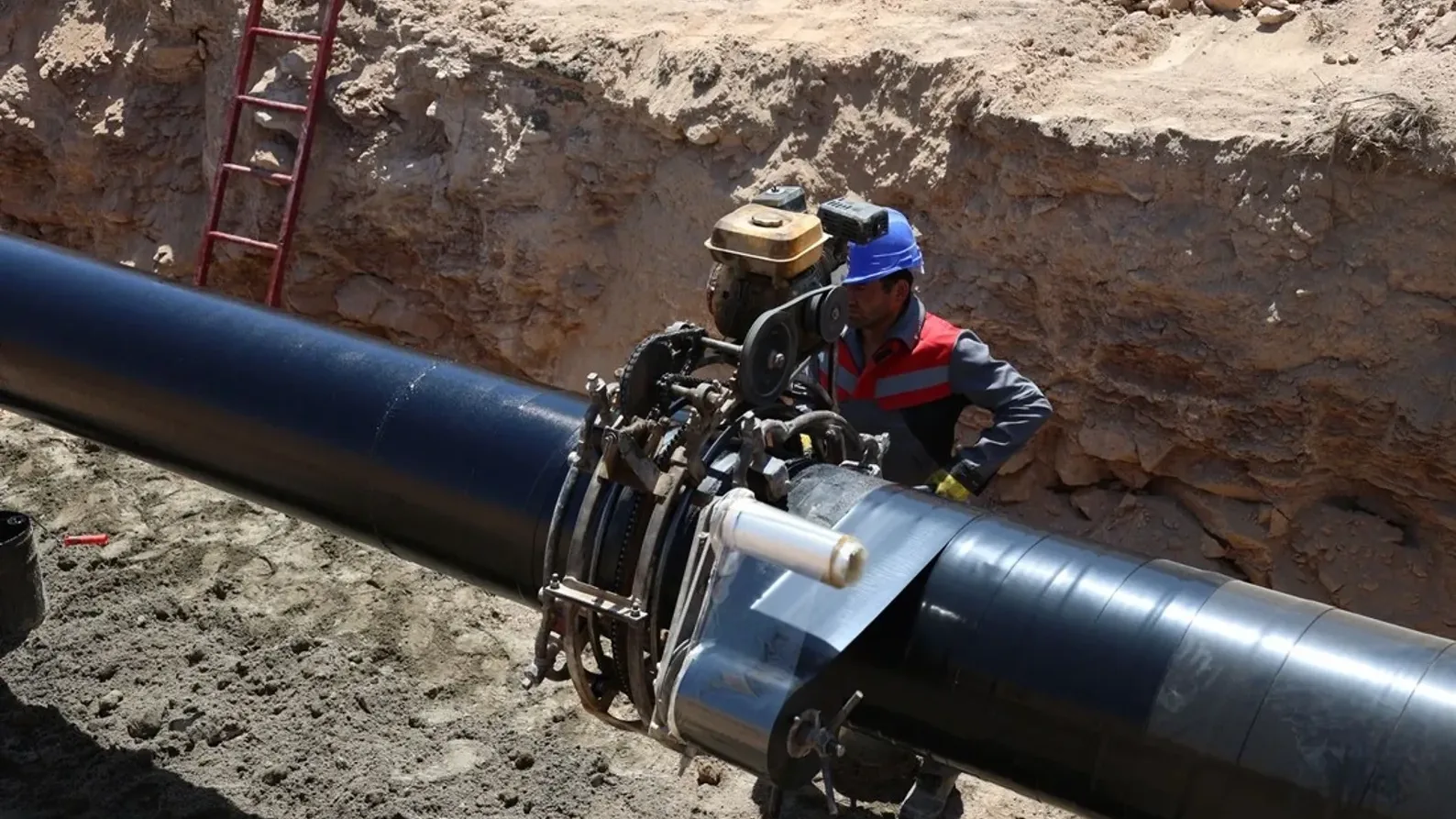
Pashinyan also mentioned the TRIPP project, which he described as one of the outcomes of the Washington process.
Pashinyan said that the project aims to improve transport links between Armenia and Azerbaijan, strengthen regional connectivity, and develop railway and road infrastructure, adding that work is ongoing.
The Prime Minister stated that the opening of transport routes is important not only economically, but also for increasing contacts between Armenian and Azerbaijani societies.
“Peace is not perfect”
Pashinyan also stressed that the process between the two countries should not be seen as complete. He said that humanitarian issues such as missing persons, detainees, and demining remain to be resolved, and noted that both Armenia and Azerbaijan need to make greater efforts in these areas.
Recalling that the two societies had experience of living together peacefully before the long years of conflict, Pashinyan said the goal is not to recreate the past, but to establish a new era of good-neighborly relations based on mutual respect for sovereignty, territorial integrity, and political independence.
He also touched on the past between Hesse and Armenia
Concluding his speech, Pashinyan referred to relations between Hesse and Armenia, recalling that Hesse was among the regions that provided aid to Armenia after the 1988 Spitak earthquake.
Pashinyan noted that, with Hesse’s support at the time, structures such as a hospital and a kindergarten were built in Armenia, and said that receiving a peace award in the same region years later carried special meaning for him.
Pashinyan also stated that Armenia has reached one of the most advanced stages to date in its relations with the European Union, and thanked Germany and other European countries for their support for democratic reforms.